Thursday, February 12, 2015

Update on the No Child Left Inside Act


Here's an update from February 11, 2015 on the federal No Child Left Inside Act - that supports outdoor learning.
Reblogged from the Outdoors Alliance for Kids...

"Senators Jack Reed (RI-D) and Mark Kirk (IL-R) and Congressmen John Sarbanes (MD-R) and Mike Fitzpatrick (PA-R) introduced legislation aimed at improving environmental education in our nation’s public schools. Supported by the Outdoors Alliance for Kids (OAK), the No Child Left Inside Act would provide grants to school districts, support teacher training and promote the integration of outdoor learning into the regular school curriculum.
The legislation would enhance opportunities for school children and adolescents to learn about, and in, the great outdoors. Environmental education has been shown to increase academic performance across subject areas and has been linked to improvements in critical thinking skills, student motivation, civic engagement and environmental stewardship. Environmental education, particularly when practiced outdoors, can increase the amount of physical activity children and youth engage in during the school day.
“Today’s children will be asked to tackle tomorrow’s environmental challenges,” says Michael Brune, Sierra Club Executive Director. “It’s our responsibility to ensure our kids have opportunities to get outdoors and learn about the natural world. The No Child Left Inside Act will provide young people with the foundation they need to succeed and lead in a climate changing world.”
“We are hopeful that 2015 is the year that Congress acts to ensure that America’s youth have access to high-quality environmental education programs that we know help improve student achievement, connect young people to their communities, and build environmental literacy,” says Judy Braus, North American Association for Environmental Education Executive Director. “If we want our students to be competitive in a global economy, they need to be environmentally literate.”
Environmental Education

Wednesday, February 11, 2015

The Matrix: New Curriculum Resources from Ag in the Classroom


Ag in the Classroom currently reaches 6.5 million school students in the US - and the goal is to reach more.
Here's the USDA blog on the new curriculum Matrix that helps teachers access lesson plans.

Students learn about agriculture by using materials available online through the Ag in the Classroom’s Matrix.
(iStock image- fom USDA Blog)
  • Click on the Ag in the Classroom's February Resources below - get inspired and take your students out to learn!
Honey Bees: A Pollination Simulation


  • Add agricultural literacy to your academic standards.


Wednesday, February 4, 2015

Celebrating Soils! 2015 International Year of Soils

2015 is the UN’s International Year of Soils.


Key messages from the UN’s global Food and Agriculture Organization are:
  • Healthy soils are the basis for healthy food production.
  • Soils are the foundation for vegetation which is cultivated or managed for feed, fiber, fuel and medicinal products.
  • Soils support our planet's biodiversity and they host a quarter of the total biodiversity.
  • Soils help to combat and adapt to climate change by playing a key role in the carbon cycle.
  • Soils store and filter water, improving our resilience to floods and droughts.
  • Soil is a non-renewable resource; its preservation is essential for food security and our sustainable future.


Studying Soil with elementary-age students? Hit the NGSS standards relating to soils and ecosystems and begin with these 8 activities.
  1. Go dig up some soil, put in a jar, add water, shake and leave.  What do you notice after a few minutes, a day, a week?
  2. Contact your local Extension office and do a soil test for nutrients and chemical composition.
  3. Start composting: Begin with a “decomposition” experiment…
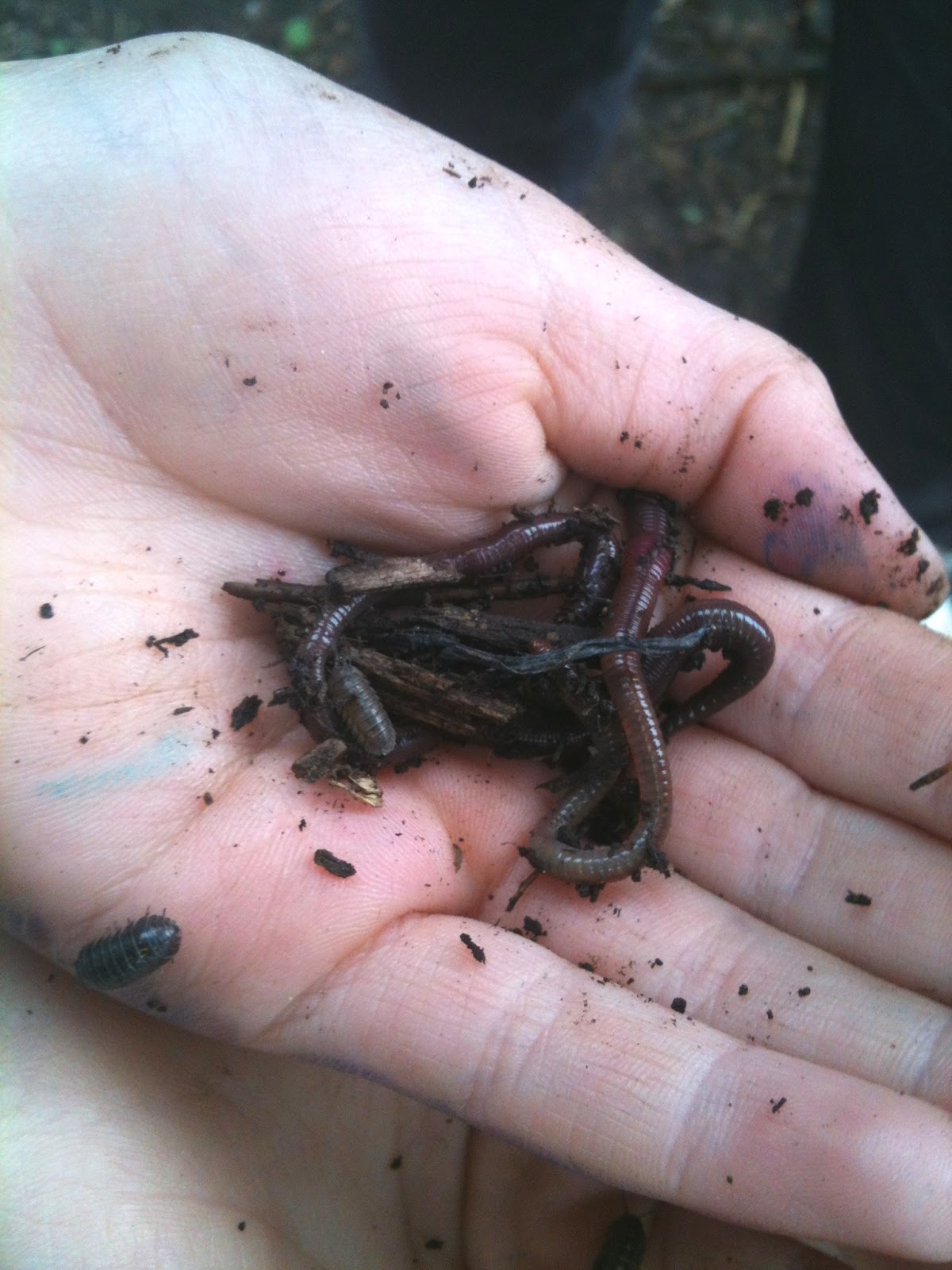
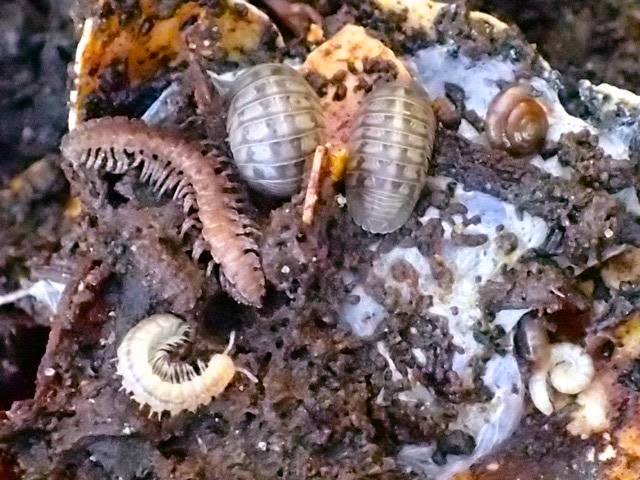
  4.  Study life in your soil...
    ...and compost.


  5. Invite a soil scientist to visit with your class. See http://www.soils4teachers.org/ask or invite a soil professional from your Soil and Water Conservation District
  6. Raise awareness on soils in your locality.
    1. Here in Arlington, I am working with some residents to invite the County Board to proclaim 2015 as our local Year of Soils. Your class could outreach to your local officials and legislators. Every day is "earth day".
    2. Check out your local environmental education nonprofits, Cooperative Extension and Master Gardeners for classes on composting and soil management.
  7. Also why not work on hydroponics and aquaponics - the art and science of growing plants without soil? Here's a new starter "Aquafarm"... Product Details https://www.backtotheroots.com/shop/aquafarm
  8. Project-based learning? Identify and solve a problem such as soil erosion in your schoolyard.


Monthly Films Celebrate Soil and Diversity
These monthly two-minute films developed by the Soil Science Society of America highlight different aspects of soils and society. Each month has information on the theme, a lesson plan, and other outreach activities. Click on the month below to see the activities and films.
January - Soils Sustain Life
July - Soils are Living
February - Soils Support Urban Life
August - Soils Support Health
March - Soils Support Agriculture
September - Soils Protect the Natural Environment
April - Soils Clean and Capture Water
October - Soils and the Products We Use
May - Soils Support Buildings/Infrastructure
November - Soils and Climate
June - Soils Support Recreation
December - Soils, Culture, and People


Additional Resources
International Year of Soils Logos at


Soil Science Society of America
Resources for International Year of Soils and Soil Education


Junior Master Gardeners Teacher Leader Guide
Chapter Two is easy hands-on experiments with soils.


Example of countertop demonstration Aquaponic kit - $60
https://www.backtotheroots.com/shop/aquafarm and at other retailers

Additional movies:
Dirt! The Movie - streaming for $3, and to buy at http://www.dirtthemovie.org/the-film/
Symphony of the Soil - streaming for $5.99 at http://www.symphonyofthesoil.com/

Soil Test kits are available from your local Cooperative Extension office

Wednesday, January 21, 2015

Apples for the Teachers

Apples
Apples may be on the menu for lunch or snack at school today. Chances are your school computer might also be named after one. What are the latest go-to tools for teaching about apples?

Here is the video link to Apples in the How Does It Grows series by Nicole Jolly.
This is the "first of its kind series" that follows food from farm to fork.


Watch the 5-minute video at any season. 
Then extend the learning for your students’ age group.

Study a fruit tree

Ornamental Cherry Tree
 Gunston Middle School, Arlington

  • Take your class out in the spring to study an apple tree, or visit a fruit tree from the same Rosacea (rose) family; such as a cherry, plum, almond or pear. 
  • Observe the flowers and leaves of your fruit tree. Count the petals on the flower. Look at the leaf shape and edge. Can you see how the fruit is forming?
  • Visit the same fruit tree over the following months. Study how the fruit ripens. 
  • What else do you find evidence of living on and near the tree?
  • How does a tree produce its own food, and get water and nutrients?
  • How does the tree grow in the spring, and summer and fall, and then conserve energy in the winter? 
  • How does the tree fit in our ecosystem? 


Taste a fruit


Farm to School Day
Arlington, Fall 2014

  • Feature locally grown, fresh apples as part of a Farm-to-School program.
  • Visit a local orchard or fruit farm.
  • Check out nutrition facts and some recipes.
    Why do we say, "An apple a day...keeps the doctor away"?


Link to Pollinators


The How it Grows: Apples film states that 100 hives of bees are needed to cross-pollinate the 27,500 apple trees in the Lyman’s 100-acre apple orchard. 

  • Extend your study of apple family trees to pollinators, including both native bees and honeybees too.
  • Research the latest discussions, science and politics of crop pollination. For example, discuss pollination of the almond crop in California.


Apples: history, myth and inspiration


Apples (1975) by Don Moulton
Portland ME Museum of Art

  • Research the apple in religion, myth, storytelling and history including: Adam and Eve, the Golden Apples, Newton, Johnny Appleseed, Apple Corps.  and the Apple Inc. computer brand name and logo? 
  • Design your own apple and name it
  • What product would you name after a fruit and why? 
  • Do you like playing Bananagrams or Appleletters? 


These are all questions to mull over while you munch an apple slice or two, 
or choose to reach for a banana. 

As Greek fairy tales say:

" Three apples have fallen from the sky; one is for me; one is for him who listens; and the third is for him who tells this tale."


Resources for apples as teaching tools:

How Does it Grow http://www.howgrow.org/
Red Tomato/Eco Apple http://www.redtomato.org/eco-apple/
US Apple Association http://usapple.org
Apple Activities for 4-6 grade http://usapple.org/PDF/4-6guide.pdf 
Apple Activities for PreK - 3 http://usapple.org/PDF/p-3.pdf 
How Apples Grow by Betsy Maestro (for elementary age students)
Farm to School http://www.farmtoschool.org/
Garden to Snack/Classroom e.g. in Charlottesville, VA  http://www.cityschoolyardgarden.org/2015/01/22/seasonal-snacks-from-garden-to-classroom/

Pollinators: Bee Basics An Introduction to Our Native Bees by Beatriz Moisset et al.

https://pollinator.org/PDFs/BeeBasicsBook.pdf
Intro to USDA research on pollinators http://www.ars.usda.gov/Research/docs.htm?docid=24105

Fairy Tales of Greece, Retold by Ronald Seth, 1961


Wednesday, December 17, 2014

Wonderful Weeds: What's Growing in the Garden and When? Weed ID for Schools


"
What is a weed?"  "What's this? Shall I pull it out?"

Here is an 18-page photo guide to help identify the top 30+ most frequently weeds in schoolyard gardens, and some thoughts on best management practices.
Download, laminate and use this photo guide for outdoor learning classes!


Downloadable at Weed Identification for Schools 2014 from Mary Van Dyke


And if you are interested to find out more on weed science and management, check out the new free digital iBook Principles of Weed Ecology and Management by Bruce Ackley and Alyssa of Ohio State University (336 pages for version 1.0,  December 2014).
Downloadable from:  https://itunes.apple.com/us/book/principles-weed-ecology-management/id953632085?mt=11


Thursday, December 11, 2014

UL Innovative Education Awards for Non-Profits in US and Canada - apply now!


THE UL INNOVATIVE EDUCATION AWARD IS GRANTING $250,000 TO NONPROFITS. HELP US SPREAD THE WORD!
Dear NAAEE (North American Association for Environmental Education) Members:

If you attended our annual conference this year, you may have heard about NAAEE’s exciting new collaboration with Underwriters Laboratories (UL, the global safety science leader), the UL Innovative Education Award! The program, open now for submissions, supports the development of our future leaders by awarding nonprofits for their work in environmental and STEM education for children.

This is a first-of its-kind opportunity and a total of $250,000 will be awarded in addition to professional mentorship opportunities and more! But to find the most deserving organizations, we have to let them know that this opportunity exists. 

We need your help to spread the word about the program far and wide!  If you are involved with or know of an educational nonprofit that fits within the guidelines below, please let them know! By driving interest and enthusiasm for the award, you can help support the great work of non-profits across the U.S. and Canada as well as elevate the visibility of environmental education as a driver of STEM and curiosity.

Award Overview
The UL Innovative Education Award aims to recognize and support the critical work of U.S. and Canadian nonprofits that embrace E-STEM to inspire school-aged children to be the next generation of game-changing scientists, business leaders, researchers, inventors, and engineers.   The program supports E-STEM work with school-aged children (K-12) that is:
  • Advancing STEM learning through research and investigation
  • Promoting social responsibility and citizenship
  • Tackling environmental problems

Recognition Grants and Support
One $100,000 grant, two $50,000 grants, and two $25,000 grants will be awarded in the final program. In addition to recognition grants, UL employees, including science, engineering and technical experts, will work directly with the selected organizations to provide expertise, resources, and volunteer hours to help further their efforts in E-STEM education.  

Eligibility
Participants must:
  • Be a US 501c3 not-for-profit corporation or be registered with the Canada Revenue Agency as a non-profit organization (NPO) or be a program run by a US 501c3 not-for-profit corporation or Canadian equivalent NPO.  
  • Utilize E-STEM principles in innovative ways to teach school-aged (K-12) children in the US or Canada
  • Have an organization or program operating budget no greater than $2 million.

The UL Innovative Education Award website address is: http://naaee.org/ulinnovativeeducation. Pass it on today!

Please feel free to contact me directly with additional questions. Furthermore, if you would like to join the mailing list for the UL Innovative Education Award, you can sign up here: http://ulinnovationeducation.naaee.net/mailinglist

Thank you for your help!

Sincerely,
Christiane Maertens
Deputy Director
North American Association for Environmental Education
Christiane.Maertens@gmail.com

Wednesday, December 10, 2014

Birds and Maps: How about using YardMap as a SchoolMap?


YardMap screenshot

YardMap is a new citizen science project NSF funded through Cornell Lab of Ornithology to help map habitat for birds in the environment.
  • Use the YardMap tool to map habitat for birds in your home yard.
  • Then use YardMap to map habitat for birds in your school or a park?


At Jamestown Elementary School, Arlington, the school's "Green Team" club and Ms Payack's Second Grade class have made a bird feeder station.

The Second Grade class follows neotropical migrating birds and connects with a school in Nicaragua through the Smithsonian's Bridging the Americas. Bridging the Americas/Unidos por Las Aves is a year-long project that enhances both cultural and environmental awareness for schools in MD and VA, NH and VT through partnership with schools in Latin America.

It may be that these students and others can use this YardMap tool to map and analyze their schoolyard bird habitat - both in the courtyard and also in the playground and surrounding meadow and forest areas?

Details at http://content.yardmap.org/