Showing posts with label compost. Show all posts

Wednesday, March 9, 2016

APS School Garden Meetup Tours Arlington Career Center Native Plant Garden and Greenhouse

By Mary Van Dyke

Today the APS School Garden Meetup group is at the Arlington Career Center.
Arlington Career Center
Our host is Joan Horwitt, volunteer with the Program for Employment Preparedness (PEP) and President of Reevesland Learning Center. This afternoon’s tour is introduced by Margaret Chung, Principal at the Career Center. Ms Chung highlights the collaborative teaching and integrative experiential learning practiced at the Career Center, and their new initiatives in Sustainable Technologies and Arlington Tech.

New Native Plant Garden at Career Center
PEP teacher, Rosemary Donaldson, shows us the work in progress on a new native plant garden to encourage more Monarch butterflies and other pollinators to feed on and enjoy the habitat. Students from the Sustainable Technology program are constructing the garden fence. PEP students and volunteers planted the garden, including Milkweeds for Monarch caterpillar food and nectar, as well as a selection of native plants to provide flowers with nectar and pollen from spring through to fall. There are now over 100 native plants here. This will be a wonderful showcase for the Plant NOVA Natives campaign. This year, the garden will be graced by many insect pollinators.


Then we go round to the Career Center's Greenhouse.  
Arlington Career Center Greenhouse
Joan Horwitt, volunteers each week to help PEP students practice life skills including horticulture. The Greenhouse is a great resource to the community. Margaret Chung, as principal of the Career Center, is very supportive of re-energizing use of the Greenhouse. Other staff, including Robert Johnson, Michael Cruse, Rosemary Donaldson and many others, have helped too, creating an environment for integrative learning and partnerships.


In the Greenhouse

You can see many examples of the students’ work in the Greenhouse. There’s a tank of Grasses for the Masses being grown for the Chesapeake Bay. In another area a new tank is being built for aquaponics: rearing Tilapia fish and growing greens.
Aquaponics Tanks in Construction
Here are some sweet potatoes slips that students are beginning to sprout,
Growing Sweet Potato Slips
and some Begonias that the students have started propagating from cuttings.
Begonia Cuttings


One of the special projects initiated by Joan, is to grow micro-green sprouts. The students are growing different kinds of radish sprouts, daikon sprouts and pea sprouts. They are very tasty, and freshly grown.  The students are marketing the sprouts they grow to Bistro 360. This is one example of a business employer  that the students are working with.
Joan Horwitt Highlighting Micro-Geen Sprouts

Career Center Students with Micro-Greens
Writing a Label and Reusing a Yogurt Pot


Another project that the Career Center students are working on, in partnership with the Reevesland Learning Center, is to make compost bins and inspire others to compost. The compost bins are fairly small and made of timber with a hardware cloth lining. That way the bins keep vermin out, and the compost in. Students fill the bins with a mixture of food scraps from the Culinary Arts Students program and autumn leaves. This gives a good mixture of "greens and browns" (nitrogen- and carbon-materials). The compost mixture decomposes quite fast and at fairly high heat. Even on this cool spring day, the ambient temperature in the greenhouse is 85°, and the compost is probably around 120°. The finished compost is sieved to be fine. The students use their school-made compost and Promix to grow the micro-greens and find their own compost is already a great growing medium!


Compost Bin Designed and Built by Sustainable Technology Students

Compost

Compost Bin
The APS Superintendent is an "early adopter" of a compost bin made by the Sustainable Technology students. I’ve ordered two bins for Jamestown Elementary School. Contact Joan Horwitt or Robert Johnson (robert.johnson@apsva.us) to order up a compost bin. The compost bins cost $65 each. Please order yours now so the students can program in to make one for you too!


Like to join the APS School Garden Meetup googlegroup, and receive our occasional e-newsletter? If so, please send an email to growinggreenschools@gmail.com.

Next APS School Garden Meetups:
  • Monday April 4, 4- 5 PM, place to be confirmed
  • Monday May 8, 4- 5 PM at Carlin Springs Elementary School
LINK to March e-newsletter The ComPOST at: http://eepurl.com/bS17o

APS School Garden Meetups are an initiative of the Superintendent’s Advisory Committee on Sustainability. Author Mary Van Dyke serves on the APS Superintendent's Advisory Committee on Sustainability, and helps organize the APS School Garden Meetups.

Friday, March 20, 2015

The Potato Project: Planting Potatoes with Montessori

It is time (and later in the season than usual) to think "potatoes". It is snowing a little, although we are already past St Patrick's Day and today is the spring equinox.


This spring, the Montessori class are taking on potato planting, care, harvest and cooking as their outdoor learning project.

In the fall, I  identified a raised bed for planting close to the students' classroom. The bed is sunny and has water nearby. I enrich the soil with compost.


I initiate "The Potato Project" with two 45-minute class sessions over two weeks, and describe here how to run for a class of twenty, 3 - 5 year olds.
Please note that this activity can be adapted easily for other groups and ages.
  • Click on resources for printable version of these two sessions and higher grade VA SOL or NGSS-linked materials.
Session One: 45 mins: Indoors (can be end of March, around St Patrick's Day)

Introduction and Planning
"One Potato, Two Potatoes, Three Potatoes, Four..."
How many of the students have eaten potatoes?  How were they prepared and cooked?


We look at different kinds of "seed potatoes" and identify eyes, tubers, sprouts. Some of the potatoes are red, others yellow, some are purple.
We discuss that "seed potatoes" are not seeds from flowers, but small potatoes that are living with stored food in the tuber and will sprout to make another plant.
Potatoes are native to Mexico and South American mountain areas.
Potatoes in a market in La Paz, Bolivia
from Vegetables, p. 135 by Roger Phillips and Martyn Rix

Rock-ledge habitat of wild potato in Mexico
from Vegetables, p. 134 by Roger Phillips and Martyn Rix

And grow well in cooler parts of North America in Maine and Idaho - and around the world.
Potatoes growing in Maine
from Vegetables, p. 141 by Roger Phillips and Martyn Rix

The students put the "seed potatoes" on the window cill to sprout.
We'll leave the seed potatoes on the window cill to sprout more, and will plant them in the garden next week - on Day 7.
I ask the teacher Ms Kipperman, if she and the students can cut the seed potatoes in half on Day 6 and leave the potatoes to "heal", to air dry for the planting session next week.

We then read Two Old Potatoes and Me by John Coy. This beautiful book sets the scene for our expectations, the "hypothesis", for our potato cultivation and celebration.

Activity: Potato Printing
Preparation:It takes about an hour for me to cut 5 lbs of potatoes into various simple designs.
I do this in the morning before the class.


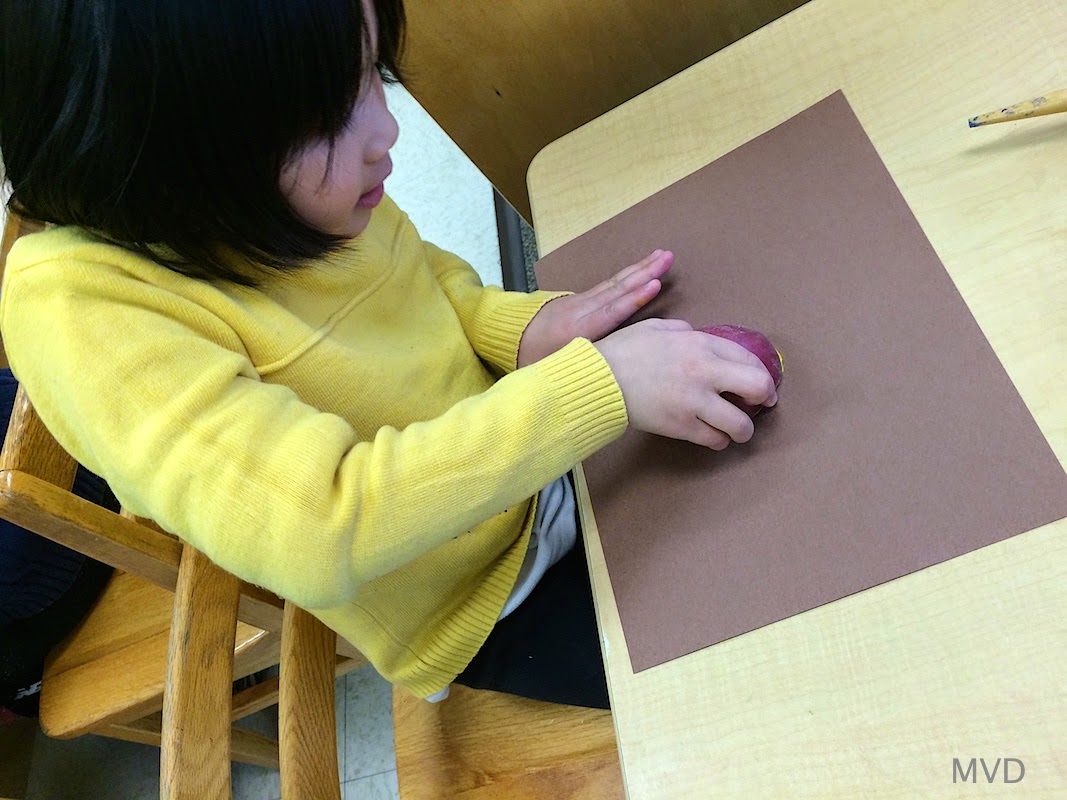
In the class, the teacher demonstrates to the students how to apply the paint thinly on the paint surface with a brush, or to dunk the potato in the paint and print. The printing with washable acrylic paints works well on ordinary construction paper.
The potato printing is a quick and fun activity for the students at the end of their school day.


This ends the Day 1, 45-minute session introducing The Potato Project.


Day 6: 
Teacher and students will take the "seed potatoes" that have been on the window sill and cut each potato in half (each half to have two or more eyes) and will leave the potatoes to dry "heal".

Next Week, Day 7,  Session Two: 45 mins: We will be mainly outdoors and
planting before spring break.

Then after spring break there will be class weekly care sessions until June:
  • Go out to potato bed, observe, journal and draw, look out for insects, and water well. 
  • Mound up earth around potato plants leaving some leaves visible. You may need to do this once a month during the growing season.
  • Adults may add compost (or fertilizer) to potatoes once or twice during growing season.
Harvest and Prepare Mashed Potatoes (June and/or September)
  • Class can harvest some or all of the potatoes in June, wash, prepare and serve "microwaved mashed potatoes" as a class celebration.
  • Or you can leave some potato plants to grow until school returns to harvest in September (as a "Legacy Garden" for next  year's class of Montessori students to harvest and enjoy!).

Resources: Link to detailed planning documents for the The Potato Project


Wednesday, February 4, 2015

Celebrating Soils! 2015 International Year of Soils

2015 is the UN’s International Year of Soils.


Key messages from the UN’s global Food and Agriculture Organization are:
  • Healthy soils are the basis for healthy food production.
  • Soils are the foundation for vegetation which is cultivated or managed for feed, fiber, fuel and medicinal products.
  • Soils support our planet's biodiversity and they host a quarter of the total biodiversity.
  • Soils help to combat and adapt to climate change by playing a key role in the carbon cycle.
  • Soils store and filter water, improving our resilience to floods and droughts.
  • Soil is a non-renewable resource; its preservation is essential for food security and our sustainable future.


Studying Soil with elementary-age students? Hit the NGSS standards relating to soils and ecosystems and begin with these 8 activities.
  1. Go dig up some soil, put in a jar, add water, shake and leave.  What do you notice after a few minutes, a day, a week?
  2. Contact your local Extension office and do a soil test for nutrients and chemical composition.
  3. Start composting: Begin with a “decomposition” experiment…
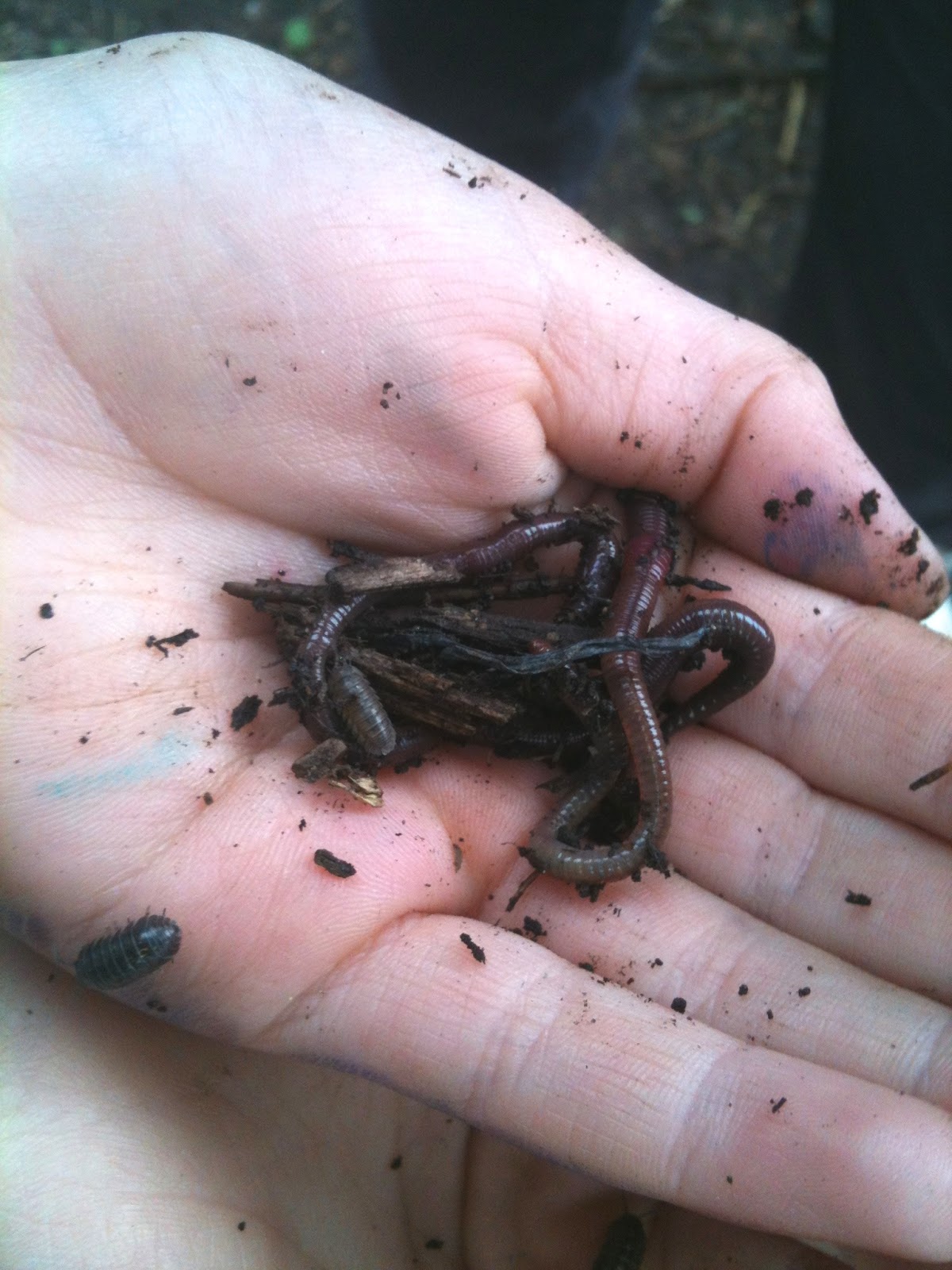
  4.  Study life in your soil...
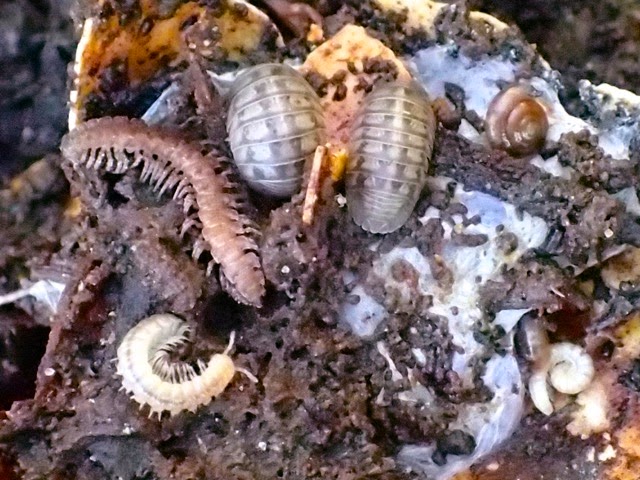
    ...and compost.


  5. Invite a soil scientist to visit with your class. See http://www.soils4teachers.org/ask or invite a soil professional from your Soil and Water Conservation District
  6. Raise awareness on soils in your locality.
    1. Here in Arlington, I am working with some residents to invite the County Board to proclaim 2015 as our local Year of Soils. Your class could outreach to your local officials and legislators. Every day is "earth day".
    2. Check out your local environmental education nonprofits, Cooperative Extension and Master Gardeners for classes on composting and soil management.
  7. Also why not work on hydroponics and aquaponics - the art and science of growing plants without soil? Here's a new starter "Aquafarm"... Product Details https://www.backtotheroots.com/shop/aquafarm
  8. Project-based learning? Identify and solve a problem such as soil erosion in your schoolyard.


Monthly Films Celebrate Soil and Diversity
These monthly two-minute films developed by the Soil Science Society of America highlight different aspects of soils and society. Each month has information on the theme, a lesson plan, and other outreach activities. Click on the month below to see the activities and films.
January - Soils Sustain Life
July - Soils are Living
February - Soils Support Urban Life
August - Soils Support Health
March - Soils Support Agriculture
September - Soils Protect the Natural Environment
April - Soils Clean and Capture Water
October - Soils and the Products We Use
May - Soils Support Buildings/Infrastructure
November - Soils and Climate
June - Soils Support Recreation
December - Soils, Culture, and People


Additional Resources
International Year of Soils Logos at


Soil Science Society of America
Resources for International Year of Soils and Soil Education


Junior Master Gardeners Teacher Leader Guide
Chapter Two is easy hands-on experiments with soils.


Example of countertop demonstration Aquaponic kit - $60
https://www.backtotheroots.com/shop/aquafarm and at other retailers

Additional movies:
Dirt! The Movie - streaming for $3, and to buy at http://www.dirtthemovie.org/the-film/
Symphony of the Soil - streaming for $5.99 at http://www.symphonyofthesoil.com/

Soil Test kits are available from your local Cooperative Extension office