It’s June and here is a bunch of flowers that I picked from the garden to celebrate the weekend and my son’s high school graduation.
While a Dutch or Flemish artist painting a still life in the seventeenth century might collage an arrangement from flowers, fruit and insects at different seasons. My photo simply shows the bounty of flowers out in the garden today. Last week, peonies were in flower; this week their seedpods are revealed and the petals are scattered on the ground. Last week, daylilies were in bud and now they are out.
The June Flowers vase is a mixture of native plant cultivars and ornamentals imported from around the world selected for their interest, beauty, or perhaps sheer persistence in the landscape.
What are the stories of these flowers? Why are they growing in my garden in Northern VirginIa?
Click links for details of each flower
 The reddish leaves, pink/white flowers, and purple seedheads complement the red-orange brickwalls of the house. Penstemon thrives in full sun, and is tolerant of deer, drought, and clay. Penstemon species is native to this area, and this cultivar also attracts birds and butterflies. After a season or two here it is producing seedlings that I can transplant elsewhere or can pot up to give away. I love the flowers and seedheads for cut-flower arrangements.
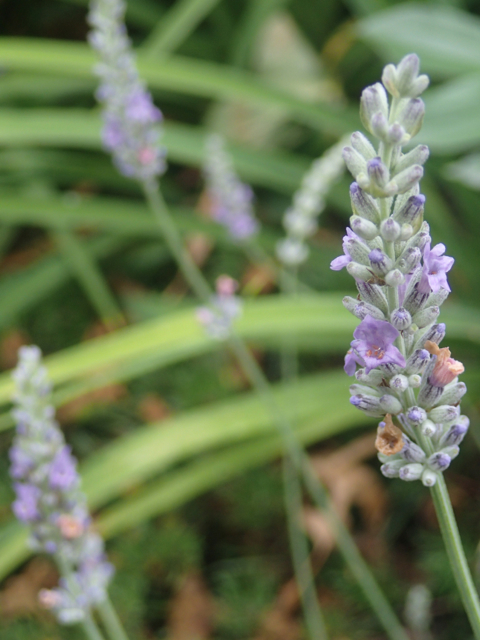 Lavender is not native to England, although it has a long history in English gardening. Lavender is originally a mediterranean plant and prefers dry alkaline soils and full sun. So why do I try to grow lavender here in our humid Virginian climate and acidic heavy clay soil? Lavender scent reminds me of potpourri, soap, summers with roses, peonies. To grow Lavender successfully here amend the clay soil with gypsum, plant on a well-drained bank and sprinkle gravel on the ground over the roots.. I am careful not to mulch with bark mulch. Even so, lavender suffers in cold and damp weather. I accept that the lavender will be short-lived here, and I will have to replant every few years. In the summer I pick lavender flowers, enjoying the buzz of bees busy drinking the nectar, and I pick the flower stems to make lavender wands and to make sweet-smelling sachets too. Last year, I used lavender flowers to flavor blueberry scones and an onion quiche. An acquired taste perhaps but what a wonderful scent!
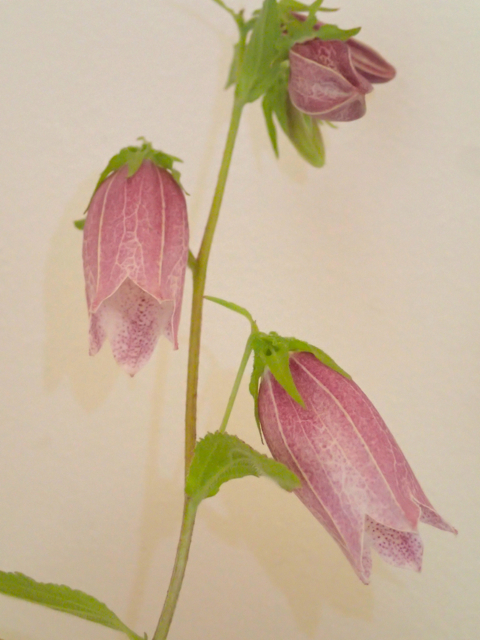
This Korean Bellflower is beautiful in color and structure, but this native to Korea is a non-native ornamental here and has aggressive growing characteristics. This Campanula reproduces both by seeds and rhizomatically and out-competes other plants in the garden. I pick all the Bellflowers to reduce seeding, but still after several years of trying to eradicate the plant, it resprouts each spring. I would advise not planting the Korean Bellflower in a Northern Virginia garden. The Bellflower might well escape and become invasive. However, if you do choose to grow a Bellflower, plant it in raised bed with edges - or a pot to contain it and make sure to pick the flowers!
The Spiderwort is native to Virginia and can grow aggressively by self-seeding. If you need to contain the plant you can grow Spiderwort in a pot and deadhead the flowers before it goes to seed. Spiderwort prefers damp clay soils and grows well in part to full-shade. It is very tolerant of conditions here in suburbia. I love the dark blue flowers that close in the afternoon and open each day. Spiderwort has a long blooming time from April to July and with trimming - perhaps some fall reblooming too .
The plant is named after John Tradescant the Younger, botanist and gardener who visited Virginia in the 1600s. He added to his father’s “cabinet of curiosities” that forms the basis of the Ashmolean museum in Oxford. The “Tradescant collection in Oxford has a beautiful cloak said to have belonged to Powhatan. So the Latin name of this plant evokes European and Oxford roots. Tradescantia thrives planted under trees and with other plants. Here in the garden it is naturalized, and I enjoy watching where it grows each year. Make sure to trim the plants back after flowering, as the leaves flop and you can thin old clumps. Notice that the viscous secretion when you cut the stems becomes like a spider’s thread on hardening, hence the plant’s common name, Spiderwort.
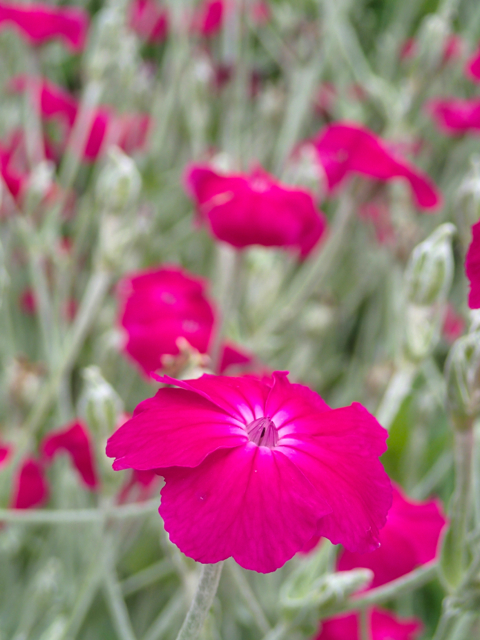 Rose Campion is one of my favorite flowers in the yard and vase, and it freely self-seeds. Rose Campion loves full sun, and is deer and drought tolerant. It blooms from May to July. I love the simple bright magenta blooms that hover above the silver-grey foliage. The foliage and flowers contrast well with other flowers in the garden. If I need to reduce the seeding potential I deadhead and trim the flower stems back after flowering. The silver foliage is pretty and the plant is not so aggressive as the familiar and kid-favorite Lambs’ Ears Stachys byzantina.
Grow the Giant Onion for “wow” value and drama. I pick the 6-inch or larger spherical flower clusters as they are seeding and hang in cool dry place to dry and use in winter flower arrangements. The Allium onion family are easy to grow, preferring full sun and well-drained soils. They are disliked by rabbit and deer and are one of several plants that are able to grow under black walnuts. Plant several giant onion bulbs in a group for full effect.
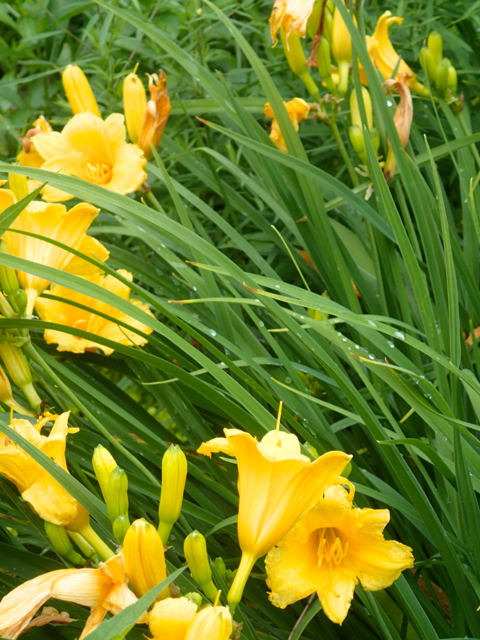 There are over 35, 000 varieties of daylily. This one is probably Stella D’Oro. The flowers are a collector and breeder’s delight with blooms ranging from lemon yellow, pink, rose, orange, rust, through to deep burgundy. I grow the “iconic” orange daylily and one or two other cultivars too in the garden, and enjoy using the blooms in flower arrangement. The orange daylily is ubiquitous here and naturalized in the landscape, but it is not native, having been imported in the nineteenth century. According to the National Parks Service the orange daylily often escapes into park areas from vacant home plots and building sites - and the dense tuberous roots make it hard to control. Over the next few years I will probably try to reduce the numbers of orange daylilies that are growing here in the garden and replace them with other flowers native to our area.
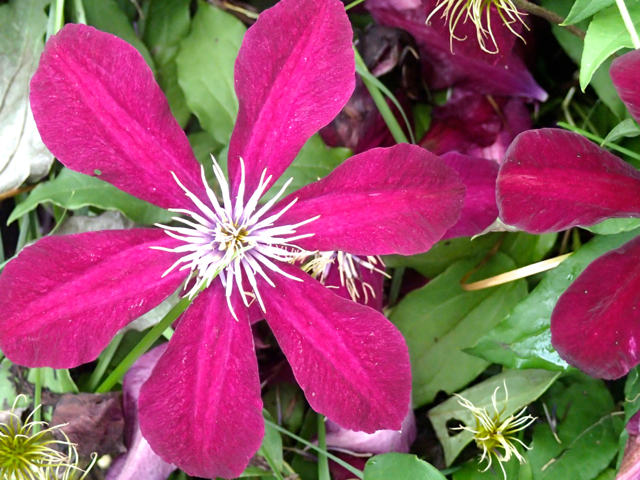
This Clematis "Niobe" with burgundy six-petalled flowers and golden stamens is sterile and does not seed. The flowers and leaves of clematis prefer full sun while their roots prefer a cool, shady area. This clematis grows up an old lamp post with a trellis in part-shade. Or you could grow it over a shrub or small tree. Prune in late fall to early spring before new shoots appear, as the blooms are on the current year’s growth. The clematis likes feeding and mulching. It is easy to take care of and deer-resistant.
What flowers will be blooming in the garden next month?


