
It's time to register for this year's NSTA National Science Teachers Association Conference http://www.nsta.org/conferences/national.aspx that will be in Boston in April.
One of the four conference strands will be focused on Science and Literacy: A Symbiotic Relationship.
Today I wrote a conference proposal for our regional NSTA and VA Office of Environmental Educators conference that will be held in Richmond VA in October 16 - 18 2014.
My conference proposal theme is Growing Stories: Literature in the Garden.
Read Paul Fleishman's inspirational Weslandia

Here's a second grader's design for a staple crop...

Interested in teaching Native American culture, ecology and biodiversity with your class of 8-year olds?
 Read Susan Jeffer's Brother Eagle Sister Sky.
And weave a Web of Life with your class using the activity plan from Junior Master Gardeners Literature in the Garden.

Examples of these classes are blogged on:
Arlington Traditional School's Gardening Blog:
Read Weslandia and Design New Staple Crops Second Grade 11/22/2011
Brother Eagle, Sister Sky Second Grade 3/27/12
For further suggestions on environmental-themed literature for children:
Check out award-winning books from the Junior Master Gardeners and American Horticultural Society's "Growing Good Kids Book Awards"...
Cultivate reading in your garden!
And weave a Web of Life with your class using the activity plan from Junior Master Gardeners Literature in the Garden.
Arlington Traditional School's Gardening Blog:
Read Weslandia and Design New Staple Crops Second Grade 11/22/2011
Brother Eagle, Sister Sky Second Grade 3/27/12
Check out award-winning books from the Junior Master Gardeners and American Horticultural Society's "Growing Good Kids Book Awards"...
Cultivate reading in your garden!


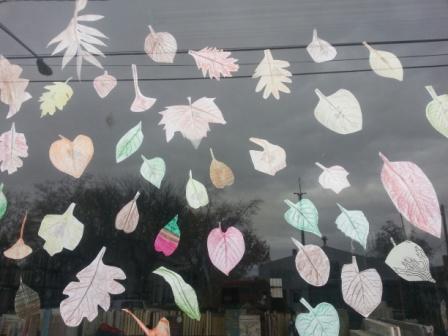 I shared these changes with the afterschool kids, and they discussed seasonal changes they have seen. Due to time and daylight limitations, I brought nature indoors, sharing leaves that I found at home. (If time allows, I’d recommend you take students outside to look for leaves and other signs of fall. Wooded areas, school yards, parks, neighborhoods, even your own backyard are all great places to search.)
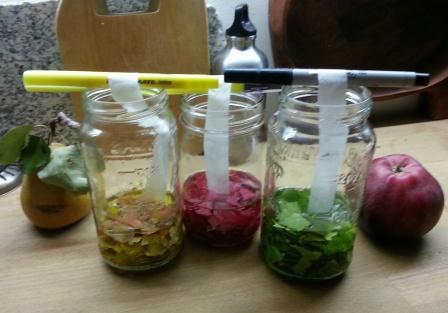 Although a leaf may appear to be one color, it actually contains pigments of multiple colors. In the summer, chlorophyll, the green pigment, dominates, concealing others. As chlorophyll breaks down in the fall, other pigments reveal themselves or form, turning the leaves yellow, orange, or red. I led the afterschool students through a chromatography experiment to identify what colors were hiding inside the leaves.
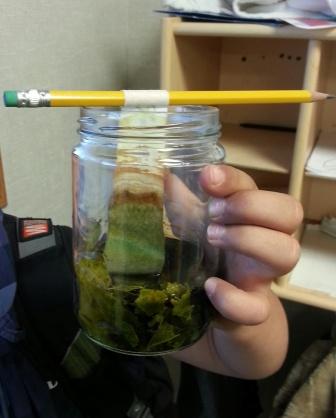 We successfully extracted red, yellow, and green pigments from the leaves! Because the color of each leaf is determined by a combination of the pigments inside, each paper strip had bands of colors in different sizes.